Connective Reading: A Shift in Literacy Instruction
Question: What is most important to you as an educator?
Is it forming meaningful relationships with your students? Helping them find the value of a reading life? Is it turning them into independent problem solvers and critical thinkers? Maybe you’d like them to become curious observers and inquisitive questioners? Or perhaps, like me, high on your priority list is to simply send your students off into the world as kind, compassionate, empathetic humans?
My guess is that you didn’t say, “my ultimate teaching goal is to turn my students into exceptional standardized test takers.” (*And if you did… well…perhaps this post is not for you.)
Although, let’s face it. It’s quite easy to lose track of what’s important when test scores are tied to school grades and performance pay, not to mention your teaching reputation. Goodness knows we have enough accountability and people to answer to. But don’t you think we need some accountability to ourselves? To do everything in our power to keep what’s most important front of mind throughout the year?
Teaching children how to read is important.
Teaching children how to be readers is equally important. But it’s also one of the first things to go by the wayside once standardized testing rears its head.
Here’s what I’ve learned after 20 years in the classroom: good readers are good test takers. Create readers and you create children who have knowledge. Children who have knowledge excel in standardized testing.

*Interesting fact: Children who are homeschooled (most of whom are taught with a literature-based curriculum and have never seen a standardized test) generally perform well on the SAT, often exceeding the average scores of their traditionally schooled peers. (Ray, 2010, 2015, 2017; Ray & Hoelzle, 2024).
Let’s teach them to be readers.
Here’s how:
Do everything in your power to build a strong community around books. Place books in their hands and right at their fingertips. Speak the language of children’s books by reading as many as you can yourself. Notice what your students enjoy and match them with similar books and similar readers. Cheer their reading victories and pull them out of reading slumps. Smile to yourself when you catch them reading inside of their desks and chuckle at their moans when you stop reading aloud at the end of chapter.
This is what’s important. The rest will follow.
But what about the standards? How will I have time to teach everything?
I’ll tell you: You kill two birds with one well-intentioned instructional stone.
Why teach the theme of a story with a substandard passage when you can share an unforgettable folktale like Mufaro’s Beautiful Daughters, The Talking Eggs, or The Empty Pot?
Why trudge through a dull central idea and details worksheet when you can share Supermoms! Animal Heroes, Whose Feet are These?, or What Do You Do With a Tail Like This?
Why teach figurative language with a tired textbook when you can share the lyrical language of Come On, Rain! or Berry Song?
In my third-grade classroom, we start every single day with a picture book. Just like our independent reading time and chapter book read-aloud, it’s a non-negotiable in the day’s schedule. It serves as a morning meeting, a touchpoint for all forty of my students, and joyful way to build a reading culture and community.
It’s also invaluable instructional time.
I welcome everyone to the rug, go over our daily schedule, and ask for volunteers to give a Book Talk. Once we’ve settled all of our housekeeping items I launch into a read aloud. Here’s where the two birds/one stone comes into play. The picture books I choose are always intentional– never chosen willy-nilly off the shelf. They are books that provide opportunities to either introduce or reinforce a comprehension skill.
They also align with our current theme of study. For instance, in November our theme of study is inventors and inventions. Before the unit begins, I gather as many picture books as I can on inventors/inventions (there are SO many excellent ones!) and read through them, looking for opportunities to infuse our current area of comprehension focus. In this case it was non-fiction text structures and author’s perspective. Pausing to point out an example of author’s perspective in an authentic text provides a more engaging, visually stimulating, and relatable, allowing modeling for high-level comprehension skills. Comprehension standards can be introduced with less cognitive load, allowing for critical thinking, meaningful discussion, and little bit of story magic called Narrative Transport to take place.
I don’t know about your class, but my students would much rather learn through a beautifully written and illustrated, authentic and engaging picture book than a leveled reader or textbook. And lest us not forget all of the incredible hidden benefits that purely reading aloud provides students. By turning a simple read-aloud into an instructional opportunity you get remarkable bang for your buck–and as teachers we’re always looking for value without compromising quality.
It takes a small amount of time to seek out/plan/align your read-alouds, but let me tell you, the ROI is second to none.
By the end of the year we have shared no fewer than 180 picture books. Students have been introduced to myriad authors and genres. They have been transported through numerous time periods and jet-stetted around the globe. They have walked in characters’ shoes to rise above challenges, to overcome adversity, and to solve problems. We have laughed, cried, wondered, discussed hard topics, made countless connections, and formed so many inside jokes that folks from the outside think we’re speaking a different language.
Create lifelong readers ✔️
Build a strong classroom community ✔️
Send them off into the next grade as kind, compassionate, empathetic humans? Time will tell. But at least I know I’ve done my part. ✔️
Read books. Create readers. It’s simple and it’s extraordinarily important.
yours in reading,
rawley
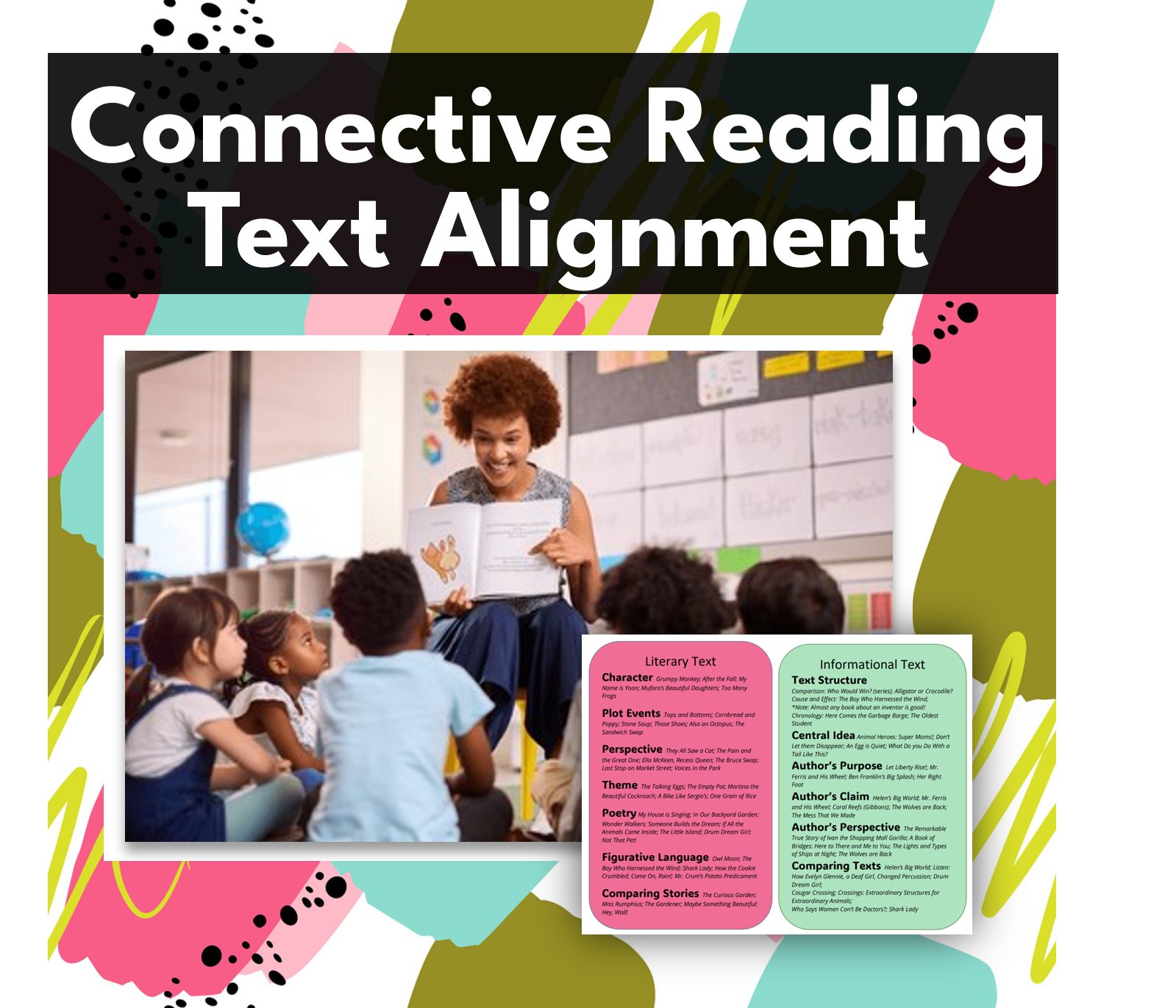
hello, freebie!
Grab your FREE list of tried and true read-aloud titles that are connected to highly tested comprehension standards!
{I’d bet most of these books are already on your shelf or in your school library!}